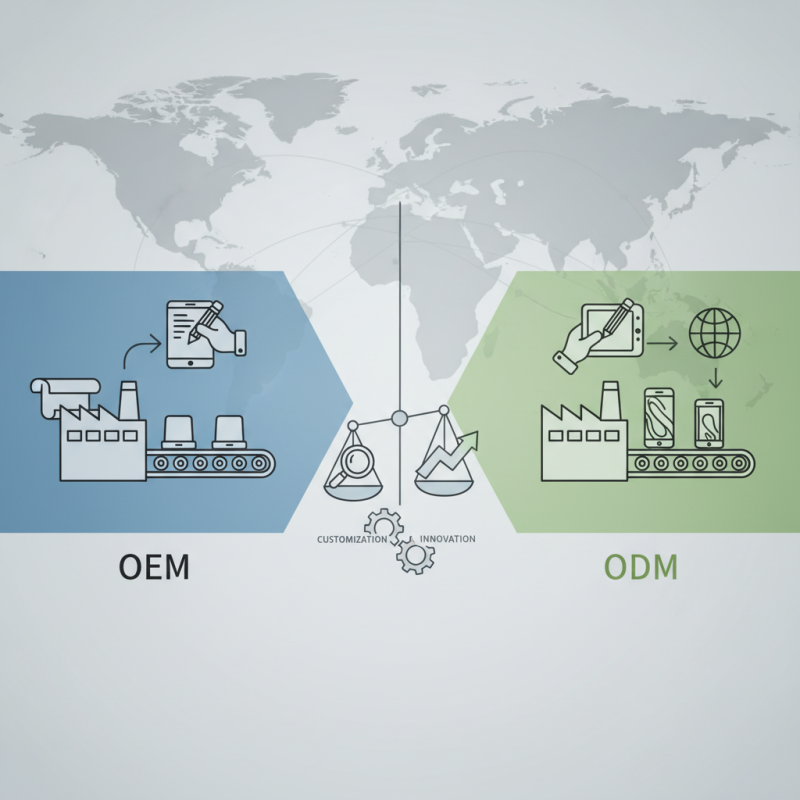
When you're dealing with products on a global scale, understanding what OEM and ODM really mean is kind of a must-have. So, here's the scoop: OEM, or Original Equipment Manufacturer, basically refers to companies that make products based on someone else's designs—think of it like doing the manufacturing part for another brand. On the flip side, ODM, or Original Design Manufacturer, handles everything from designing to manufacturing, offering a more all-in-one package. Knowing the difference between these two can really shape how you approach sourcing and even influence the customer experience.
Honestly, these terms sound simple, but their implications are pretty important. If you're choosing between OEM and ODM, your decision can impact how you develop your products and even your brand identity. Going OEM gives you some room to customize, but it might limit your flexibility in design. Meanwhile, ODM offers a more streamlined, one-stop-shop solution, but you might have less control over the final product. All these choices impact quality, costs, and how long things take.
Figuring out which route to go isn't always straightforward. Big players like Foxconn and Pegatron are known for their OEM quality, while brands like Xiaomi lean more toward the ODM model. Getting a good grip on these differences can really help you make smarter decisions around the world. Not every company fits perfectly into just one mold, and digging into these options can uncover both hidden challenges and new opportunities. Taking the time to understand this complexity can actually lead to better business outcomes—and maybe save you some headaches along the way.
What is OEM: Definition and Key Characteristics in Manufacturing
Original Equipment Manufacturer (OEM) plays a crucial role in today's global manufacturing landscape. OEM is defined as a company that designs and manufactures products, which other companies then sell under their own brand names. This model is particularly beneficial for businesses that lack the resources to produce goods independently. In fact, a recent industry report indicated that the global OEM market was valued at approximately $423 billion in 2022, reflecting its significance and growth.
One key characteristic of OEM is its focus on design collaboration. OEMs often work closely with brands to customize products to meet specific requirements. This relationship enhances production efficiency, allowing brands to focus on marketing and sales strategies. Interestingly, the same report highlighted that around 55% of manufacturers rely on OEMs for product development. This reliance suggests a trend towards specialization, where companies streamline operations for better market performance.
However, not all OEM agreements are seamless. Challenges such as quality control and communication barriers can arise, potentially impacting product outcomes. Reports note that nearly 20% of buyers have faced issues with OEM services. Addressing these challenges requires ongoing dialogue and clear expectations. As the landscape evolves, understanding the dynamics of OEM will remain essential for businesses seeking sustainable growth.
Exploring ODM: Definition and Core Features for Global Buyers
Original Design Manufacturers (ODMs) play a significant role in the global market. They offer more than just production capabilities. ODMs design products based on specific requirements. This allows brands to focus on marketing while leveraging ODM’s expertise in innovation.
Working with ODMs can save companies time and resources. Their strong design capabilities can lead to unique products that stand out. However, there is a risk. Some businesses may overlook the importance of protecting intellectual property. Transparency in communication is crucial to ensure both parties have aligned goals.
Engaging with ODMs provides various benefits but also challenges. The relationship requires trust and clear expectations. Companies must research and choose the right ODM to avoid misalignment. Understanding the core features of ODMs is vital for any global buyer. This knowledge can lead to successful collaborations and better market performance.
Comparative Analysis of OEM and ODM: Advantages and Limitations
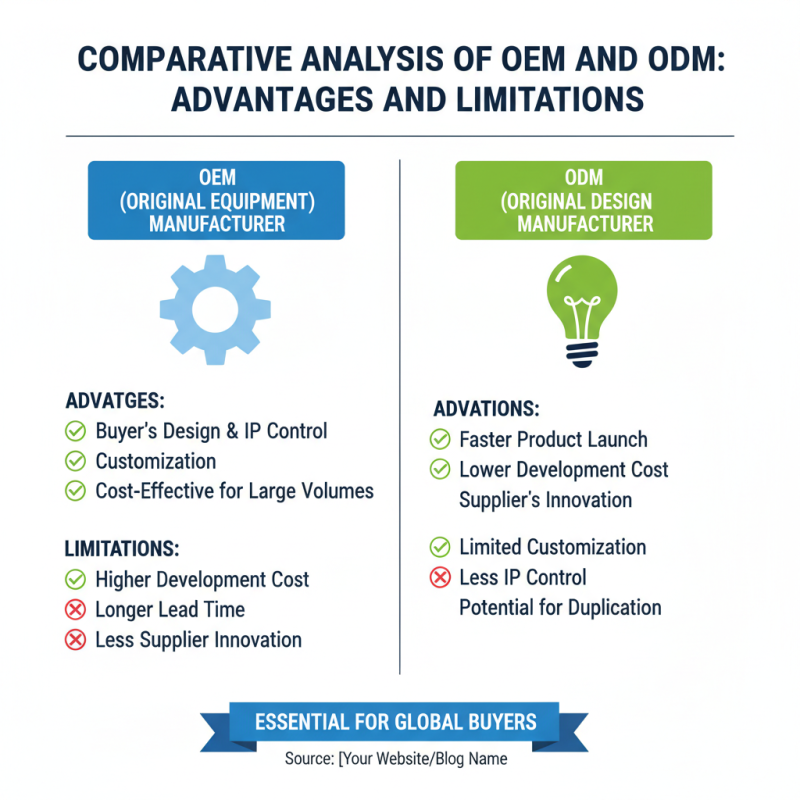
Understanding the differences between OEM and ODM is essential for global buyers. OEM stands for Original Equipment Manufacturer, while ODM means Original Design Manufacturer. These manufacturing methods influence product development and customization options.
OEM allows buyers to have their designs produced. They provide specifications, and the manufacturer produces the items. Buyers retain control over product features and branding. However, this method requires significant design investment and technical knowledge. It may be slow to market, as product iterations could take longer.
In contrast, ODM offers buyers ready-made products. These manufacturers design items that can be rebranded by buyers. This approach can save time and resources, providing quicker access to market trends. Yet, the lack of customization may not fit every brand. Limited exclusivity can dilute a brand's unique identity. Buyers must weigh these aspects carefully before choosing between the two options.
Market Trends: The Growing Demand for OEM and ODM Solutions
The demand for OEM and ODM solutions is on the rise. This trend reflects the changing landscape of global commerce. Buyers are increasingly looking for customized products that meet specific market needs. OEM (Original Equipment Manufacturer) allows for product creation based on pre-existing designs. This can save time and resources for businesses. ODM (Original Design Manufacturer) takes it a step further by providing unique designs. This means more options for buyers to differentiate their offerings.
Market trends indicate a shift toward agility in production. Companies are realizing that tailored solutions can enhance competitiveness. Factors such as reduced lead times and flexibility in production processes are vital. This evolution has led to a growing interest in partnerships with OEM and ODM providers. However, it's crucial for buyers to ensure that quality standards are met. Not all suppliers have the same level of expertise or reliability. Therefore, thorough vetting processes are essential to avoid pitfalls.
While the opportunities are vast, challenges remain. The balance between cost and quality can be difficult to achieve. Some manufacturers may cut corners, leading to subpar products. Building strong relationships with suppliers can mitigate these risks. Trust and transparency should be prioritized. The dynamic nature of these markets demands constant reflection and adaptation. Buyers must remain vigilant to navigate this complex landscape effectively.
This chart illustrates the market demand for OEM and ODM manufacturing solutions, with OEM solutions showing a higher demand of 150 million units compared to 100 million units for ODM solutions. This reflects the current trends in consumer preferences and manufacturing strategies in the global market.
Cost Implications: Understanding Pricing Structures in OEM vs ODM
When considering OEM (Original Equipment Manufacturer) and ODM (Original Design Manufacturer), cost implications are crucial. An OEM typically provides components based on the buyer's specifications. This can often lead to lower upfront costs, around 10-20% less than ODMs, which offer more extensive design services. However, the long-term financial picture may shift.
ODMs handle both design and manufacturing. This service comes with an increased price, usually about 30-50% higher than OEMs. However, buyers might save on R&D costs and time since ODMs develop products that are market-ready. According to a recent industry report by Statista, 62% of companies prefer ODMs for quicker time-to-market, despite the higher initial costs.
It's essential to evaluate quality and reliability in price structures. Lower initial costs with OEMs can result in higher total costs if quality issues arise later. Additionally, market trends indicate a growing preference for ODMs among companies adjusting to rapid innovation cycles, challenging traditional cost assumptions. Balancing these factors is crucial for making informed sourcing decisions.
Quality Control: Standards and Practices in OEM and ODM Production
In the global manufacturing landscape, quality control is crucial for both OEM (Original Equipment Manufacturer) and ODM (Original Design Manufacturer) processes. A recent report by Deloitte highlights that up to 70% of companies experience challenges in maintaining consistent quality standards across various production sites. This inconsistency can lead to significant issues in product reliability and customer satisfaction.
Quality control practices differ notably between OEM and ODM. OEMs typically focus on producing components based on detailed specifications provided by buyers. This leads to a tightly controlled manufacturing process. ODMs, on the other hand, innovate and design products, which can introduce variability. Research from McKinsey shows that ODMs may have up to a 30% higher defect rate due to design changes and innovation cycles. This raises questions about the effectiveness of quality checks and the need for enhanced monitoring systems.
Global buyers must remain vigilant in assessing both OEM and ODM partners. Implementing robust quality management systems is essential. A 2022 report by the American Society for Quality states that companies with comprehensive quality oversight see a 25% reduction in defects. By prioritizing quality control, buyers can achieve higher product standards, but they must also continuously evaluate partner performance for optimal results.
Case Studies: Successful Global Brands Utilizing OEM and ODM Strategies
The global landscape is rich with brands leveraging OEM (Original Equipment Manufacturer) and ODM (Original Design Manufacturer) strategies. Case studies reveal varying approaches among successful companies, showcasing their unique strategies.
One compelling example is a technology brand that utilized OEM partnerships to scale quickly. By relying on established manufacturers, they focused on marketing and innovation. This allowed them to reduce production risks, achieving over over 30% growth in three years. However, they faced challenges in quality control, occasionally leading to product inconsistencies.
In contrast, a fashion retailer opted for ODM to create unique designs. With ODM, they maintained control over product aesthetics while outsourcing manufacturing. This approach led to quicker delivery times and a 25% increase in customer satisfaction. Yet, the retailer struggled with intellectual property issues occasionally due to less stringent contracts.
Tips: Ensure transparent communication with manufacturers. Establish clear quality benchmarks to avoid potential pitfalls. Regularly revisit agreements to reflect changing market needs. Balancing innovation with operational efficiency remains vital for brands aiming for sustained success.
The Essential Guide to NMNH Powder Dihydronicotinamide Mononucleotide 99% OEM: Benefits and Applications
NMNH Powder Dihydronicotinamide Mononucleotide (NMN) is increasingly recognized for its potential health benefits, particularly in the realm of dietary supplements and anti-aging formulations. With a specification of 99% purity, this white to off-white powder offers remarkable solubility in both water and ethanol, making it versatile for various applications. Its appeal is underscored by its ability to support biological functions that may contribute to improved vitality and longevity.
The product comes with a reliable test method using HPLC to ensure quality and effectiveness. Packaged conveniently from 1 to 25 kg, it also offers options for customized sizes, making it suitable for bulk orders or private labeling. In addition, potential users can take advantage of free samples ranging from 10-50g, allowing them to assess its suitability for their specific needs before making a larger commitment. With a shelf life of up to 2 years when stored in a cool, dry place away from direct sunlight, NMNH Powder is a practical choice for formulators looking to enhance their offerings with high-quality ingredients.
Furthermore, this NMN powder meets various certification standards, including ISO22000, Kosher, Halal, and Organic certifications (EU), which reinforces its credibility and quality assurance. Whether for commercial use in dietary supplements or as part of sophisticated anti-aging solutions, NMNH Powder Dihydronicotinamide Mononucleotide positions itself as an essential ingredient that caters to the growing consumer demand for effective, innovative health products.
FAQS
: OEM stands for Original Equipment Manufacturer. It enables buyers to have their unique designs produced.
Buyers retain control over product features and branding when using OEM manufacturing.
OEM often requires significant design investment and technical knowledge. It can be slow to market.
ODM stands for Original Design Manufacturer, which creates ready-made products for buyers to rebrand.
ODM saves time and resources, providing quicker access to market trends and customer preferences.
Yes, the lack of customization can dilute a brand's unique identity, which may not suit every brand.
Successful brands often delegate manufacturing. They focus on marketing and innovation while managing relationships.
Quality control is a considerable risk, leading to product inconsistencies at times.
Transparent communication and clear quality benchmarks are crucial for minimizing potential pitfalls.
Regularly revisiting agreements helps align with changing market needs and maintains operational efficiency.
Conclusion
The article "What is the Difference Between OEM and ODM for Global Buyers?" explores the essential distinctions and characteristics of Original Equipment Manufacturing (OEM) and Original Design Manufacturing (ODM). It defines each model, highlighting their core features, advantages, and limitations for global buyers. The comparative analysis emphasizes the growing market demand for both OEM and ODM solutions, outlining the cost implications and pricing structures involved.
Additionally, the article delves into quality control practices, showcasing the standards adhered to in both manufacturing processes. Through case studies, it illustrates how successful global brands leverage OEM and ODM strategies to optimize their production and design capabilities. Understanding the differences between OEM and ODM is crucial for buyers looking to make informed decisions in their sourcing strategies, balancing quality, cost, and innovation in a competitive marketplace.